
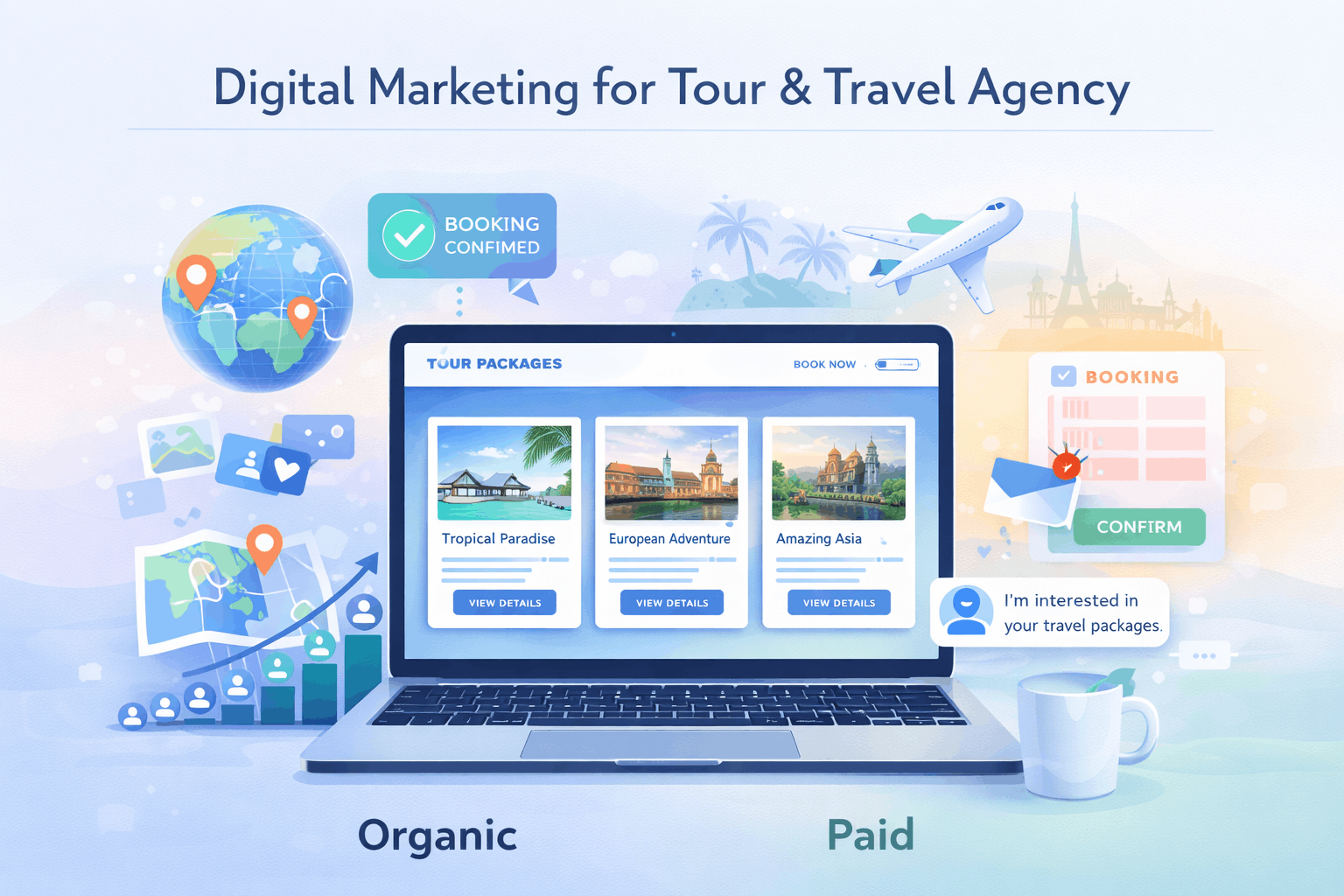
The travel industry has changed and Marketing Strategy for Tour & Travel Agencies also a lot in recent years. Today, people don’t just walk into a travel office to book a trip. They search online, compare options, read reviews, and then make a decision.
For tour and travel agencies, this shift has created both an opportunity and a challenge. The opportunity is that you can now reach more people than ever before. The challenge is that your competitors are also doing the same.
So the real question is not whether people are traveling. The real question is how do you make them choose your agency?
To answer that, you need a clear and practical marketing strategy for your tour and travel business. Not something complicated, but something that works in the real world.
Why Many Travel Agencies Fail to Get Consistent Customers
Many travel agencies depend heavily on referrals or seasonal demand. During peak seasons, they get inquiries, but during off-season periods, business slows down.
The main reason behind this problem is the lack of a consistent marketing approach. Some agencies post on social media occasionally, while others run advertisements without a clear message.
Without a proper system, marketing becomes random. And when marketing is random, results are also unpredictable.
A strong marketing strategy is not about doing many things at once. It is about doing a few important things consistently and correctly.
Understanding the Customer Journey in Travel
Before creating any strategy, it is important to understand how customers make travel decisions.
A person does not book a trip instantly. First, they get an idea. Then they search online. After that, they explore options, compare prices, check reviews, and finally make a decision.
This means your marketing should not only focus on selling. It should guide the customer through this journey.
When someone is just exploring destinations, your content should inspire them. When they are comparing options, your offers should attract them. And when they are ready to book, your communication should make the process easy.
Building a Strong Online Presence
In today’s digital world, your online presence is your identity.
When a customer hears about your agency, the first thing they do is search for you online. If they do not find a proper website or active social media profiles, they may not trust your business.
A professional website acts like your online office. It should clearly explain your services, show your tour packages, and make it easy for customers to contact you.
Along with that, your presence on platforms like Instagram and Facebook helps people discover your brand. When customers see regular updates, photos, and travel experiences, they start trusting your agency.
The Power of Visual Content in Travel Marketing
Travel is not just about destinations. It is about emotions and experiences.
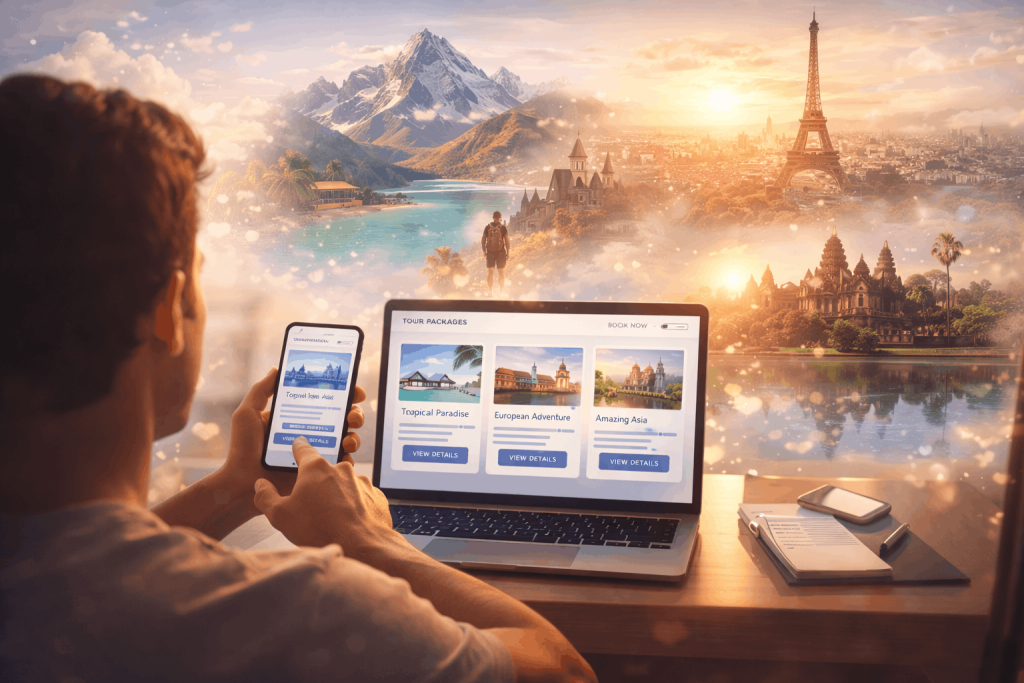
People imagine themselves in a place before they decide to visit it. This is why visual content plays a very important role in travel marketing.
Photos of beautiful locations, videos of real travel experiences, and short clips of happy customers can create a strong impression. These visuals make your audience feel connected and inspired.
When your content makes people imagine their next trip, you are already one step closer to converting them into customers.
Using Paid Advertising to Boost Reach
While organic content helps build trust, it often takes time to reach a larger audience. This is where paid advertising becomes useful.
Platforms like Facebook Ads and Instagram Ads allow you to reach people who are actively interested in travel.
With the right targeting, you can show your offers to specific groups, such as honeymoon couples, families, or adventure travelers.
However, paid advertising works best when it is simple and clear. Instead of complicated messages, focus on one strong offer that attracts attention and encourages action.
Creating Offers That People Cannot Ignore
In a competitive market, your offer plays a major role in attracting customers.
People are always comparing options. If your package looks similar to others, they may not choose you.
A strong offer is not always about low price. It is about value. This could be a special discount, a limited-time deal, a customized experience, or added benefits.
When your offer solves a problem or provides something extra, it becomes more attractive.
Building Trust Through Reviews and Experiences
Travel is a decision that involves both money and emotions. People want to feel safe before booking.
This is why reviews and testimonials are so important.
When customers see real feedback from others, it increases their confidence. Positive reviews, photos from previous trips, and customer stories can influence decisions strongly.
Trust is not built in one day. It is built through consistent communication and real experiences.
The Importance of Quick Communication
In the travel business, speed matters.
When a potential customer sends an inquiry, they are often exploring multiple options. If you respond quickly and clearly, you increase your chances of closing the deal.
Tools like WhatsApp make communication faster and more personal. Sharing package details, answering questions, and guiding customers becomes easier.
A quick and helpful response can make a big difference.
Staying Consistent with Marketing Efforts
One of the biggest mistakes businesses make is inconsistency.
They start marketing with energy but stop after a few weeks when they don’t see immediate results.
Marketing is not a one-time activity. It is an ongoing process.
Consistent posting, regular updates, and continuous engagement keep your business active in people’s minds. Over time, this builds familiarity and trust.
Combining Different Strategies for Better Results
No single strategy works alone.
Organic content helps you build relationships. Paid ads help you reach more people. A good website builds trust. Strong offers attract attention. Good communication converts leads into customers.
When you combine all these elements, your marketing becomes more effective.
Instead of depending on one method, create a simple system where each part supports the other.
Conclusion
A successful marketing strategy for tour & travel agencies is not about doing something extraordinary. It is about understanding your customers, showing them value, and staying consistent.
The travel industry will always have demand, but only those businesses grow that adapt to changing customer behavior.
Focus on building trust, creating engaging content, and communicating effectively. Over time, these efforts will bring more inquiries, more bookings, and steady business growth.
In the end, remember one simple thing people do not just buy travel packages. They buy experiences and memories. When your marketing reflects that, your business naturally grows.