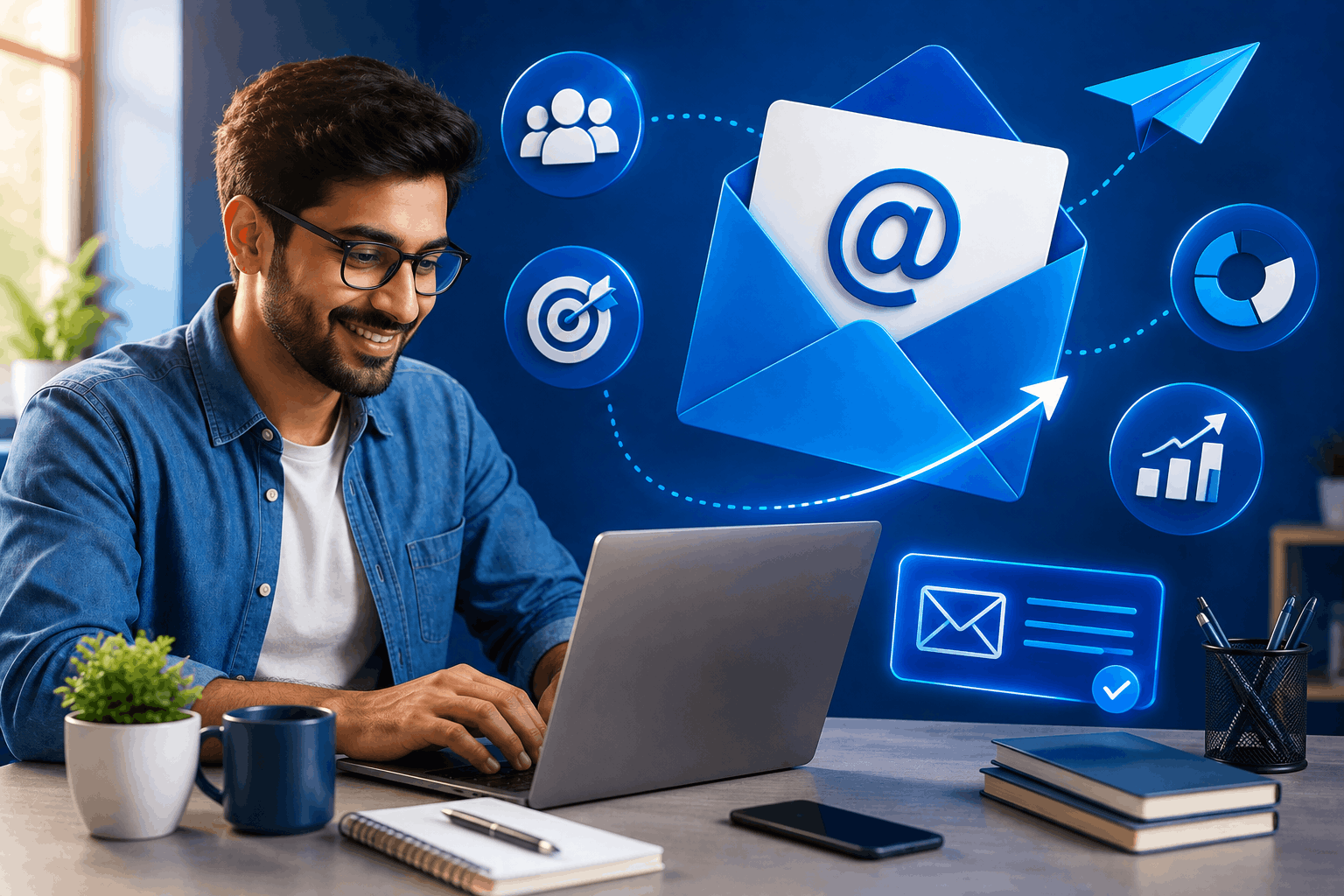
In today’s digital world, businesses have countless marketing channels to reach potential customers. However, one strategy continues to deliver one of the highest returns on investment—email marketing. Whether you’re a small business, startup, e-commerce store, or service provider, email marketing allows you to connect directly with your audience, build lasting relationships, and drive consistent sales.
This The Complete Guide of Email Marketing will help you understand everything you need to know about email marketing in 2026. From building your email list to creating high-converting campaigns and measuring performance, you’ll learn how to use email marketing to grow your business effectively.
What is Email Marketing?
Email marketing is a digital marketing strategy that involves sending targeted emails to a list of subscribers. These emails can be used to promote products, share valuable content, announce new services, nurture leads, or maintain relationships with existing customers.
Unlike social media platforms, where algorithms control your reach, email marketing gives you direct access to your audience’s inbox.
Why Email Marketing is Important in 2026
Consumers receive hundreds of marketing messages every day. Email remains one of the few channels where businesses can communicate personally and consistently with their audience.
Benefits of email marketing include:
- Builds long-term customer relationships
- Generates qualified leads
- Increases website traffic
- Promotes products and services
- Improves customer retention
- Boosts repeat purchases
- Delivers measurable results
- Offers one of the highest marketing ROIs
Businesses that consistently invest in email marketing often experience better customer loyalty and higher conversion rates.
Types of Email Marketing Campaigns
Understanding different campaign types helps you choose the right message for your audience.
1. Welcome Emails
The first email a subscriber receives after joining your mailing list. Welcome emails create a positive first impression and introduce your business.
2. Promotional Emails
These emails promote:
- Products
- Services
- Discounts
- Limited-time offers
- Seasonal campaigns
3. Newsletter Emails
Regular newsletters keep subscribers informed with:
- Company updates
- Industry news
- Educational blogs
- Tips and resources
4. Lead Nurturing Emails
These automated emails educate potential customers until they are ready to make a purchase.
5. Abandoned Cart Emails
For e-commerce businesses, abandoned cart emails remind customers to complete their purchases.
6. Re-engagement Emails
These campaigns encourage inactive subscribers to reconnect with your business.
How to Build an Email List
A quality email list is the foundation of successful email marketing.
Effective ways to grow your list include:
- Website signup forms
- Pop-up offers
- Free eBooks
- Checklists
- Free consultations
- Webinars
- Discount coupons
- Landing pages
- Newsletter subscriptions
Avoid purchasing email lists. Building an organic audience ensures higher engagement and better results.
Create High-Converting Email Campaigns
Successful email campaigns focus on providing value rather than constantly selling.
A high-converting email should include:
- Compelling subject line
- Personalized greeting
- Clear message
- Attractive visuals
- Strong call-to-action
- Mobile-friendly design
- Professional branding
Keep emails concise and encourage readers to take one specific action.
Email Marketing Best Practices
Following industry best practices improves open rates and conversions.
Personalize Every Email
Use the subscriber’s name and tailor content based on their interests.
Segment Your Audience
Divide subscribers into groups based on:
- Location
- Purchase history
- Interests
- Behavior
- Customer journey stage
Segmentation leads to more relevant communication.
Optimize for Mobile
Most emails are opened on smartphones. Ensure your emails display correctly on all devices.
Write Better Subject Lines
Your subject line determines whether subscribers open your email.
Examples include:
- Exclusive Offer Inside
- Your Free Marketing Guide is Ready
- Don’t Miss This Limited-Time Opportunity
Keep subject lines short, engaging, and benefit-driven.
Email Automation
Automation saves time while improving customer engagement.
Popular automated workflows include:
- Welcome series
- Lead nurturing
- Birthday emails
- Purchase follow-ups
- Appointment reminders
- Cart abandonment emails
- Customer feedback requests
Automation ensures timely communication without manual effort.
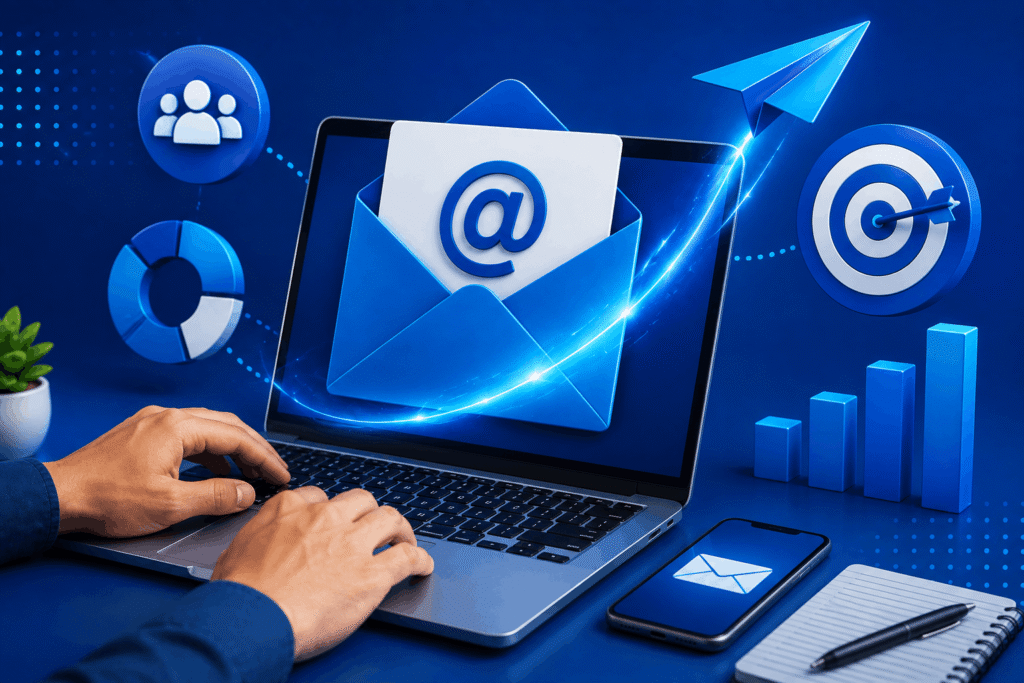
Essential Email Marketing Tools
Several platforms simplify email marketing.
Popular tools offer features such as:
- Email templates
- Automation
- Subscriber management
- Analytics
- A/B testing
- CRM integration
- Landing pages
Choose a platform based on your business size, budget, and marketing goals.
Measuring Email Marketing Success
Tracking performance helps optimize future campaigns.
Key metrics include:
- Open Rate
- Click-Through Rate (CTR)
- Conversion Rate
- Bounce Rate
- Unsubscribe Rate
- Email Deliverability
- Revenue Generated
- List Growth Rate
Regular analysis helps identify opportunities for improvement.
Common Email Marketing Mistakes
Avoid these common mistakes:
- Buying email lists
- Sending too many emails
- Ignoring mobile users
- Weak subject lines
- No clear CTA
- Poor email design
- Not segmenting subscribers
- Failing to test campaigns
Small improvements can significantly increase engagement.
Email Marketing Trends for 2026
The future of email marketing is becoming more personalized and automated.
Emerging trends include:
- AI-generated email content
- Hyper-personalization
- Interactive emails
- Predictive analytics
- Dynamic content
- Privacy-focused marketing
- Behavioral automation
- Omnichannel integration
Businesses that adopt these innovations will stay ahead of the competition.
Why Small Businesses Should Invest in Email Marketing
Email marketing offers an affordable and scalable way to grow a business.
Small businesses benefit by:
- Building customer trust
- Increasing repeat sales
- Promoting new services
- Driving website traffic
- Generating qualified leads
- Strengthening customer relationships
Unlike paid advertising, your email list is an owned marketing asset that continues to generate value over time.
Why Choose Professional Email Marketing Services?
Creating successful email campaigns requires strategy, design, copywriting, automation, and continuous optimization.
Professional email marketing services typically include:
- Email campaign planning
- Audience segmentation
- Email template design
- Marketing automation
- List management
- Performance reporting
- A/B testing
- Conversion optimization
Working with experienced professionals allows businesses to maximize results while saving time.
Conclusion
Email marketing remains one of the most powerful digital marketing channels for businesses in 2026. It enables you to communicate directly with your audience, build meaningful relationships, nurture leads, and generate consistent sales. Whether you’re launching your first campaign or improving an existing strategy, focusing on personalization, automation, valuable content, and performance tracking will help you achieve better results.
By following The Complete Guide of Email Marketing, you can create effective campaigns that strengthen customer loyalty, improve conversions, and support long-term business growth. Start building your email list today and turn subscribers into loyal customers.
Frequently Asked Questions (FAQs)
1. What is email marketing?
Email marketing is a digital marketing strategy that involves sending emails to subscribers to promote products, services, and valuable content while building customer relationships.
2. Is email marketing still effective in 2026?
Yes. Email marketing continues to deliver one of the highest returns on investment due to its direct communication, personalization, and automation capabilities.
3. How often should businesses send marketing emails?
Most businesses achieve good results by sending one to four emails per month, depending on their audience and industry.
4. What makes a successful email campaign?
A successful campaign includes a compelling subject line, personalized content, clear call-to-action, mobile-friendly design, and audience segmentation.
5. Can email marketing generate leads?
Absolutely. Email marketing helps attract, nurture, and convert prospects into paying customers through valuable and targeted communication.
6. what are the popular email marketing tools have beed used most?
Some of the most widely used email marketing tools include Mailchimp, Brevo, Klaviyo, HubSpot, ActiveCampaign, MailerLite, Constant Contact, Omnisend, GetResponse, Kit (ConvertKit), Campaign Monitor, Zoho Campaigns, Drip, Moosend, and AWeber. These platforms help businesses create email campaigns, automate marketing, manage subscribers, and improve customer engagement.