Running a business today is not just about offering good products or services. People need to discover your brand, trust your business, understand your value, and feel confident before making a purchase. Most customers do not decide to buy something after seeing a single advertisement. They may visit your website, check your social media profiles, read reviews, compare prices, and search for other options before contacting you.
This is why 360-degree digital marketing is becoming important for businesses of all sizes.
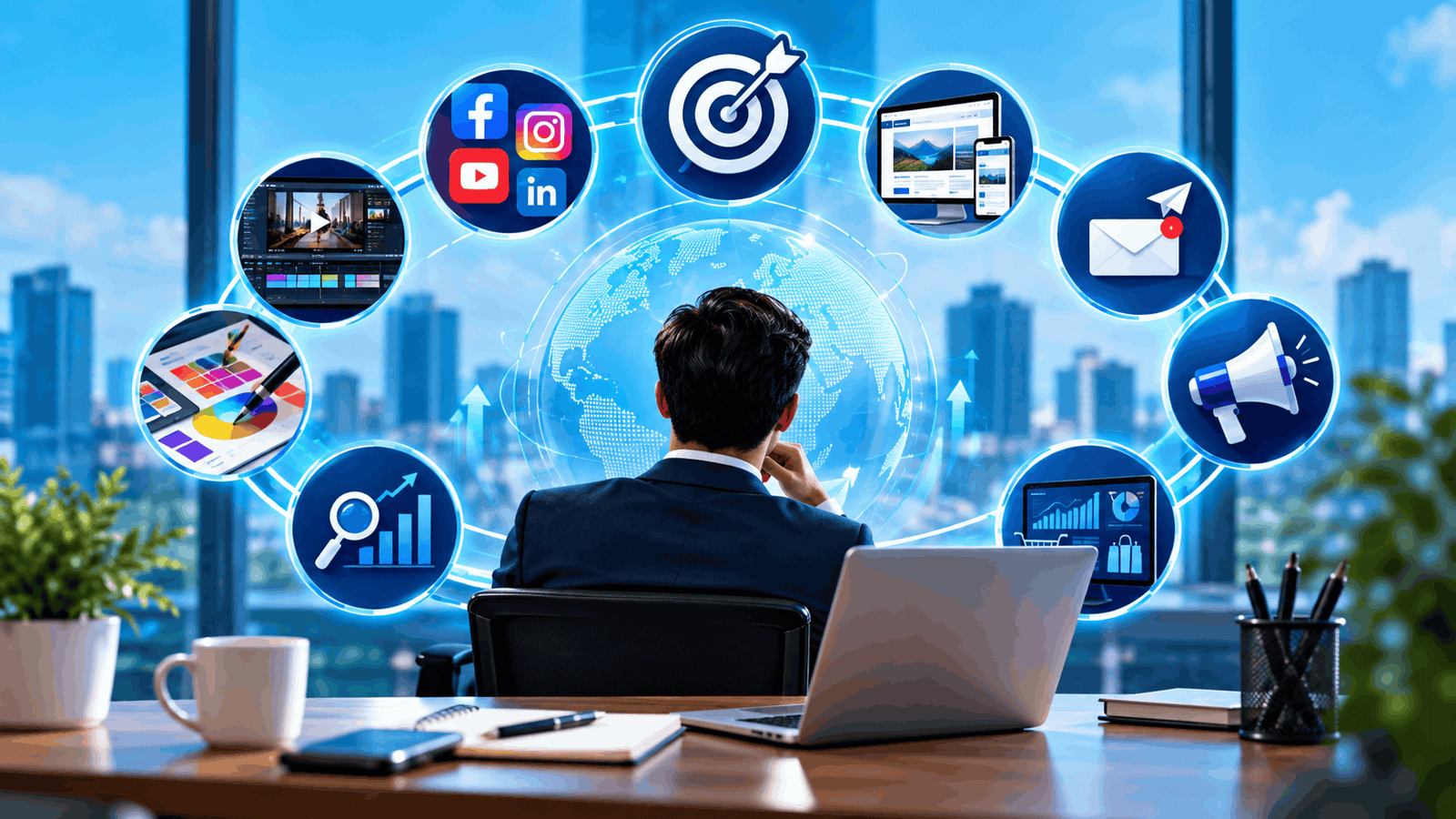
Instead of depending on only one marketing channel, a 360-degree approach connects different online marketing activities, such as social media marketing, search engine optimization (SEO), paid advertising, website management, content creation, and lead generation. All these activities work together to help your business reach the right audience and turn interest into sales.
Imagine your business is active on social media, but your website does not appear on Google. Or you are spending money on advertisements, but visitors leave your website without contacting you. These problems often happen when marketing activities are managed separately without a clear plan.
A complete digital marketing strategy helps connect these activities and gives your business a stronger online presence.
What Is 360-Degree Digital Marketing?
360-degree digital marketing is an approach that brings different online marketing channels together under one business strategy. Every channel has its own role, but all channels work towards shared goals, such as building brand awareness, attracting potential customers, increasing enquiries, and improving sales.
For example, your business can use social media to introduce a new service, SEO to help people find it through Google, paid advertisements to reach a targeted audience, and a well-designed website to convert visitors into customers.
When these activities support each other, your marketing becomes more organised and effective.
A complete strategy may include:
- Social media marketing and management
- Search engine optimization (SEO)
- Google Ads and Meta Ads campaigns
- Website design, development, and maintenance
- Graphic design and video content
- Blog writing and content marketing
- Lead generation and customer follow-up
- Performance tracking and regular improvement
Not every business needs every service at the same level. The right combination depends on your industry, audience, budget, and business goals.
Why Is 360-Degree Digital Marketing Important?
1. Your Customers Are Active on Different Platforms
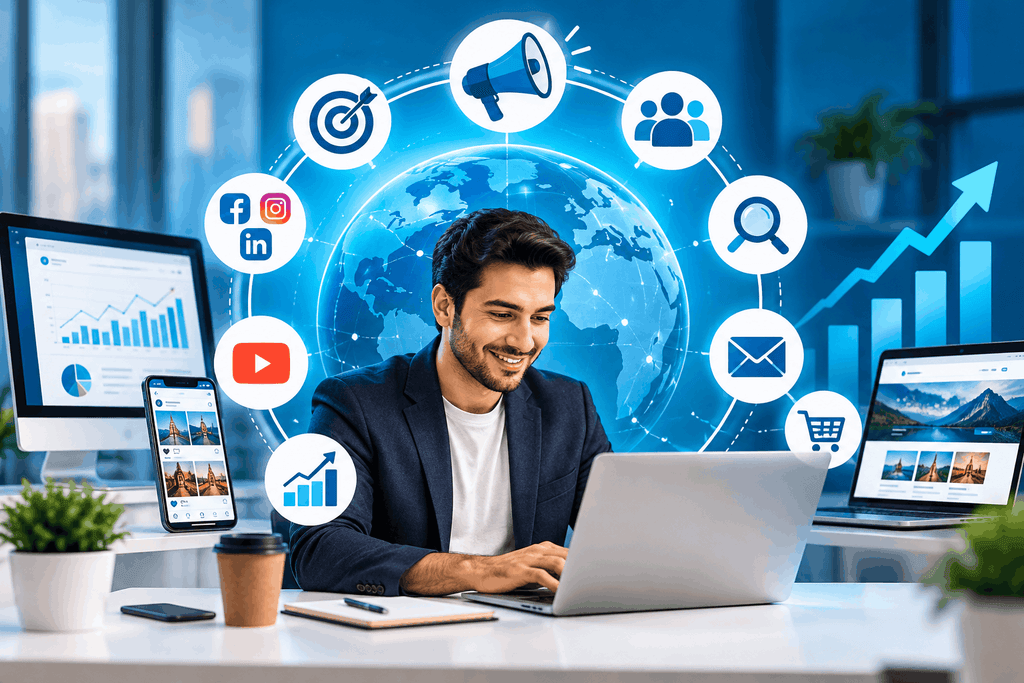
Your potential customers do not use only one online platform. Some search on Google when they need a service, while others discover businesses through Instagram, Facebook, YouTube, LinkedIn, or online recommendations.
If your business depends on only one platform, you may miss customers who use other channels.
For example, a business owner looking for a website development company may search on Google. Another person may discover the same company through a LinkedIn post or a short video showing its recent work.
A connected marketing strategy helps your business reach people at different stages of their buying journey.
You do not need to be active everywhere from day one. Start with the platforms your customers use most, then expand when your strategy and budget allow.
2. Social Media Builds Brand Awareness and Trust
Social media is one of the easiest ways to introduce your business to potential customers. Regular posts, useful tips, customer stories, project updates, and short videos help people understand what your business does.
However, simply posting every day does not guarantee sales.
Your content should answer customer questions, explain your services, show your experience, and give people a reason to contact you.
A strong social media strategy can help you:
- Keep your brand visible to your audience.
- Share useful information about your services.
- Build relationships with potential customers.
- Show your completed projects and customer feedback.
- Direct interested people to your website or enquiry form.
Social media creates awareness, but interested users may still need more information before making a decision. That is where SEO, your website, and other marketing channels become important.
3. SEO Helps Customers Find Your Business on Google
Search engine optimization helps improve your website’s visibility in unpaid search results. It allows potential customers to discover your products or services when they search for relevant information online.
For example, someone may search for “website design services for small businesses” or “SEO agency for local businesses.” If your website provides helpful content and is properly optimized, it may have a better chance of appearing for relevant searches.
SEO includes several activities, such as:
- Keyword research based on customer searches.
- Improving website pages, headings, and content.
- Fixing technical website issues.
- Improving website speed and mobile usability.
- Publishing useful blogs and service-related content.
- Building relevant website authority over time.
SEO usually requires consistent work and patience. It is not a shortcut to instant rankings, but it can help your business attract people who are already looking for what you offer.
When SEO works alongside social media and paid advertising, your brand can reach customers through multiple channels instead of relying on one source of traffic.
4. Paid Advertising Can Bring Faster Visibility
SEO can take time to produce meaningful results. Paid advertising can help businesses reach a targeted audience sooner, provided the campaign is properly planned and managed.
Google Ads can help you reach people searching for specific products or services. Meta Ads on Facebook and Instagram can help introduce your brand, promote offers, and generate enquiries from selected audiences.
Paid advertising can be useful for:
- Promoting a new service or product.
- Generating enquiries for your sales team.
- Reaching customers in selected locations.
- Testing different offers and messages.
- Retargeting eligible audiences who previously interacted with your business.
However, spending more money on ads does not automatically mean earning more money.
Your campaign also needs relevant creative content, a clear offer, a suitable landing page, accurate tracking, and a proper follow-up process.
For example, an advertisement may attract 100 visitors, but if the landing page is confusing or the contact form does not work, your business may lose potential customers.
That is why paid advertising should be connected with your website, content, and lead management process.
5. Your Website Turns Visitors into Potential Customers
Your website is more than an online business card. It is a place where people can learn about your services, compare options, check your experience, and take the next step.
Even if someone discovers your business through social media, they may visit your website before contacting you.
A professional website should clearly explain:
- What your business offers.
- Who your services are designed for.
- How your services solve customer problems.
- Why customers should consider your business.
- How people can contact you or request a quotation.
Your website should also work properly on mobile devices, load efficiently, and provide a simple browsing experience.
Regular website maintenance matters too. Broken links, outdated information, security issues, slow pages, and faulty enquiry forms can damage the customer experience.
When your website is connected with SEO, social media, and advertising, it becomes a stronger part of your sales process.
6. Consistent Content Helps People Understand Your Brand
Customers often need more than one interaction with a business before they feel ready to buy. Useful content gives them reasons to return, learn, and trust your brand.
Different content formats can serve different purposes.
For example:
- Graphic posts can explain services, offers, and important information.
- Short videos can demonstrate products, share tips, or show your work.
- Blog articles can answer common questions and support SEO.
- Case studies can explain how you helped a customer.
- Customer testimonials can provide social proof.
- Email content can help maintain relationships with interested prospects.
Your content should not be created just to fill a monthly posting calendar. Every piece should have a purpose, such as educating customers, increasing awareness, generating enquiries, or supporting a sales campaign.
When your website, social media, and advertisements share a consistent message, people can recognise your brand more easily.
7. Lead Generation Connects Marketing with Sales
Getting website visitors, social media followers, and advertisement views is useful, but these numbers alone do not tell you how much business you are generating.
Lead generation focuses on turning interest into enquiries from potential customers.
A lead may come through a website form, WhatsApp message, phone call, social media enquiry, or advertisement.
An effective lead generation process may include:
- Attracting the right audience through SEO, social media, or advertising.
- Giving people a clear reason to enquire.
- Making it easy to submit their details or contact your team.
- Responding to enquiries quickly.
- Following up with interested prospects.
- Tracking which marketing channels generate valuable leads.
Not every enquiry becomes a paying customer. Some people may be researching, comparing prices, or planning to buy later.
By tracking lead quality and sales, your business can understand which marketing activities are contributing to real growth.
8. A Connected Strategy Can Help You Use Your Budget Better
When every marketing channel is managed separately, your business may spend money on activities that do not support the same goals.
For example, your social media team may promote one offer while your website shows another. Your advertisement may attract people looking for a service that your landing page does not explain clearly.
These gaps can waste time, money, and potential opportunities.
A connected strategy helps align your messaging, content calendar, campaigns, website pages, and sales goals.
It also makes performance tracking easier. You can review website traffic, enquiry numbers, advertising costs, conversion rates, and lead quality to understand what is working.
This does not mean every marketing channel will produce the same results. Instead, each channel should have a clear role within your overall plan.
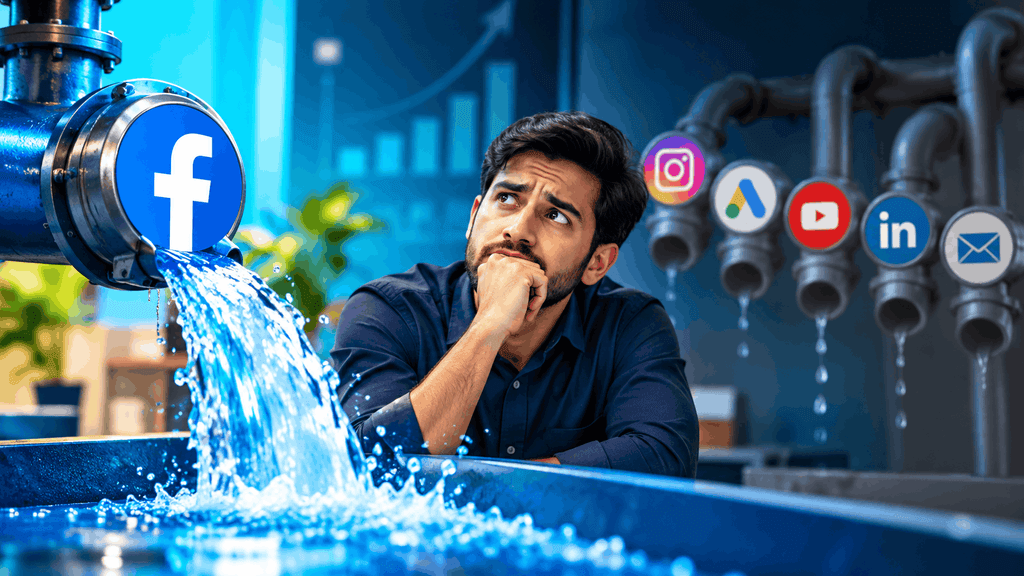
What Happens When You Depend on Only One Marketing Channel?
Relying on one marketing method may feel simple at first, but it can create challenges as your business grows.
Only Social Media Marketing
You may build followers and receive engagement, but your business could struggle to reach people who search for your services on Google. Your visibility may also be affected by changes in platform reach and audience behaviour.
Only SEO
SEO can attract valuable visitors, but it may take time to build visibility. If you do not have a strong website experience or a clear enquiry process, visitors may leave without contacting you.
Only Paid Advertising
Paid ads can bring traffic and enquiries, but results depend on your targeting, offer, campaign quality, and budget. If you stop advertising, the traffic generated directly by those campaigns may decrease.
Only Website Development
A professional website is important, but launching a website does not guarantee visitors. Your business still needs ways to attract relevant people and encourage them to take action.
The solution is not to spend money on every available service. It is to build a suitable marketing mix that supports your business goals.
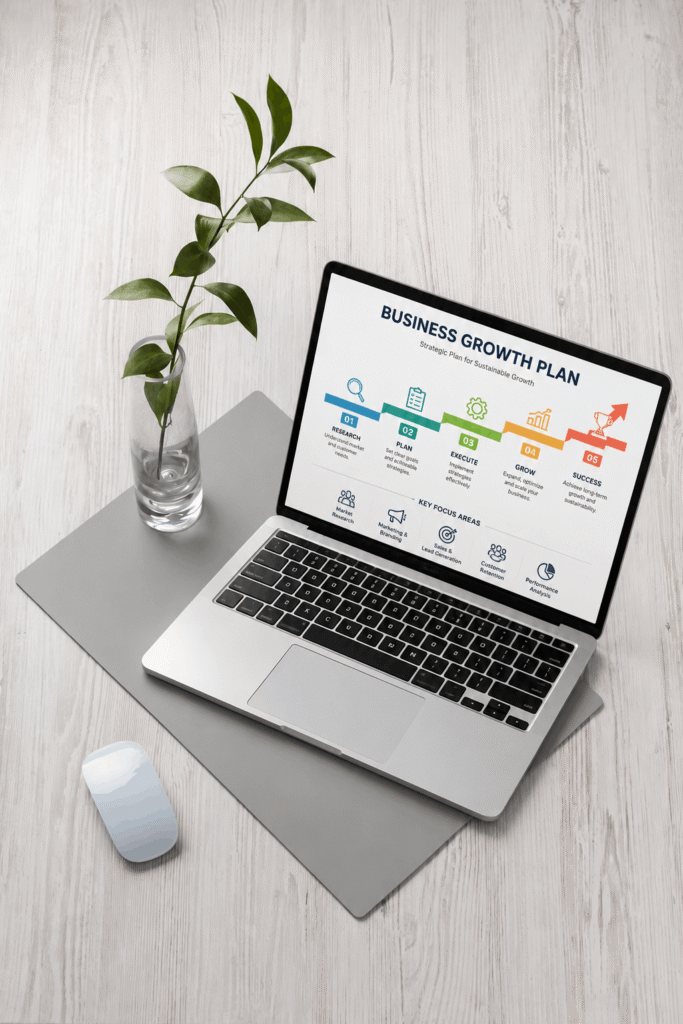
How to Build a 360-Degree Digital Marketing Strategy
You do not have to launch every marketing activity at once. A planned approach can help you start with the most important needs and improve over time.
Step 1: Set Clear Business Goals
Decide what you want to achieve. Your goal could be more enquiries, stronger brand awareness, increased website traffic, better local visibility, or more sales.
Clear goals help you choose the right services and measure progress.
Step 2: Understand Your Target Audience
Identify who your ideal customers are, what problems they face, where they search for solutions, and what influences their buying decisions.
A business selling to other companies may need LinkedIn, SEO, email outreach, and a strong service website. A local retail business may benefit more from local SEO, Google Business Profile management, and location-based social media campaigns.
Step 3: Strengthen Your Website
Make sure your website explains your services clearly, works well on mobile devices, and offers simple ways to contact your business.
Set up suitable analytics and conversion tracking so you can measure the results of your marketing activities.
Step 4: Choose the Right Marketing Channels
Select channels based on your goals, audience, and budget.
You might start with SEO and social media, then add paid advertising when your website and enquiry process are ready. Another business may need advertising first to test demand while building its long-term SEO plan.
Step 5: Create Useful and Consistent Content
Prepare a content plan that connects social media posts, videos, blogs, and campaign messages.
Focus on answering customer questions and showing how your services provide value instead of repeatedly promoting your business.
Step 6: Track Results and Improve
Review your performance regularly. Important metrics may include:
- Relevant website visitors.
- Search visibility and organic traffic.
- Qualified enquiries.
- Cost per lead.
- Lead-to-customer conversion rate.
- Sales generated from marketing.
- Return on advertising spend.
Use these results to improve your strategy. Avoid judging success only by likes, followers, or website visits.
Why Choose Picasso Multimedia for 360-Degree Digital Marketing?
Managing multiple marketing activities requires planning, coordination, creative work, and regular performance reviews. When these activities are handled without a shared strategy, important opportunities can be missed.
Picasso Multimedia helps businesses strengthen their online presence through connected digital services designed around their goals.
Our services include:
- Social Media Marketing: Build brand awareness through planned content and social media management.
- SEO Services: Improve website structure, content, and search visibility to attract relevant visitors.
- Website Design and Development: Create professional websites that explain your services and support customer enquiries.
- Lead Generation Services: Develop campaigns and enquiry processes designed to connect your business with potential customers.
- Paid Advertising: Plan and manage suitable advertising campaigns based on your target audience and business objectives.
- Creative Content: Use graphics, videos, and other content formats to communicate your message clearly.
Instead of choosing services only because they are popular, we focus on understanding your business needs and identifying the right combination of marketing activities.
Our aim is to help you build a more organised online presence, reach suitable customers, and make better use of your marketing budget. Results depend on your industry, competition, budget, and implementation, so we focus on a practical strategy rather than unrealistic promises.
Final Thoughts: Make Every Marketing Channel Work Together
Your business does not need to be everywhere. It needs to be visible in the right places, communicate a clear message, build trust, and make it easy for customers to take the next step.
Social media helps people discover your brand. SEO helps them find you through search engines. Paid advertising can increase targeted reach. Your website provides information and encourages enquiries. Content builds understanding, while lead generation helps turn interest into sales opportunities.
When these activities support one another, your business can develop a stronger and more consistent digital presence.
360-degree digital marketing is not about using every service at the same time. It is about connecting the right services with the right goals.
Ready to Grow Your Business Online?
If you want to improve your online presence, attract relevant customers, and build a marketing strategy that supports your business goals, Picasso Multimedia can help.
Visit www.picassomultimedia.com to explore our digital marketing services.
Get in touch with our team to discuss your business needs and find a suitable plan for your next stage of growth.
Build your brand. Reach the right audience. Turn more opportunities into business growth with Picasso Multimedia.