Starting an online business has become easier than ever. Today, you do not need a physical shop in a busy market to reach customers. With the help of online platforms, you can sell products to people across India and even in other countries.
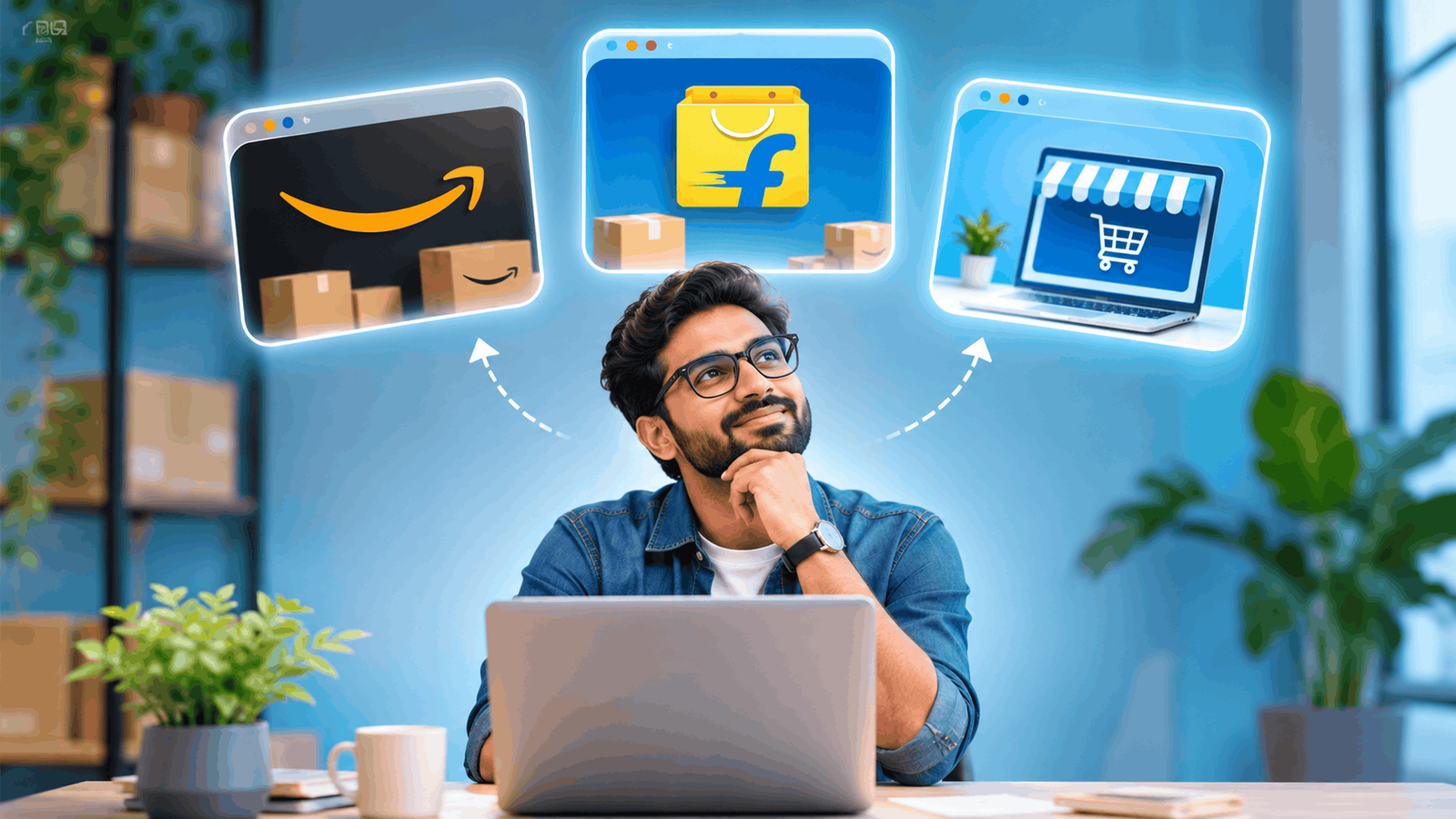
But when you decide to sell online, one important question comes to mind: Should you sell on Amazon, Flipkart, or create your own e-commerce website?
All three options offer different benefits. Amazon and Flipkart already have millions of customers, while your own website gives you more control over your brand, products, and customer relationships.
Choosing the right platform can make a big difference in your business growth, sales, and long-term profits.
In this guide, we will compare Amazon, Flipkart, and your own website, explain their advantages and disadvantages, and help you decide which option is right for your business.
Understanding the Three E-commerce Selling Options
Before comparing these platforms, let’s understand how each option works.
1. Selling on Amazon
Amazon is one of the largest online marketplaces in the world. It allows sellers to list their products and reach customers who are already searching for things to buy.
You can create a seller account, upload product details, add images, set prices, and start receiving orders.
Amazon also provides services that help sellers manage orders, delivery, and customer support.
Main benefits of Amazon:
- Access to a large number of active online shoppers.
- Customers already trust the Amazon platform.
- Different delivery and fulfilment options.
- Product advertising opportunities.
- Access to customers across different locations.
- Seller tools for managing orders and business performance.
However, selling on Amazon also comes with competition. Many sellers may offer similar products, making it difficult to stand out.
You also need to consider marketplace fees, advertising costs, product returns, and other selling expenses.
2. Selling on Flipkart
Flipkart is another popular e-commerce marketplace in India. It is especially useful for businesses that want to reach Indian customers who regularly shop online.
From fashion and electronics to home products and lifestyle accessories, Flipkart supports sellers across many product categories.
After registering as a seller, you can upload products, manage inventory, receive orders, and use Flipkart’s seller services.
Main benefits of Flipkart:
- Strong presence in the Indian online shopping market.
- Access to customers from different cities and states.
- Product listing and promotional opportunities.
- Delivery support through marketplace services.
- Customer trust in an established shopping platform.
- Seller dashboard to manage business activities.
Like Amazon, Flipkart has its own challenges. You need to compete with other sellers, follow marketplace rules, manage product quality, and maintain good seller performance.
Your business also depends on the platform’s policies, fees, and account requirements.
3. Selling Through Your Own E-commerce Website
An e-commerce website is your own online store where customers can browse products, add items to their cart, make payments, and place orders directly.
You can create an online store using platforms such as WooCommerce or Shopify.
Unlike marketplaces, your website represents your brand. You decide how products are displayed, how your store looks, what offers you provide, and how customers interact with your business.
Main benefits of your own website:
- Complete control over your online store.
- Build your own brand identity.
- No direct competition from other sellers on your product pages.
- More control over pricing and offers.
- Better opportunities for customer relationships.
- Access to website traffic and customer behaviour data.
- Freedom to create your own marketing campaigns.
However, a new website does not automatically bring customers. You need to invest time in SEO, social media, advertising, content, and other marketing activities to attract visitors.
Amazon vs Flipkart vs Your Own Website: Complete Comparison
Let’s compare all three options based on the factors that matter most to an online business.
| Comparison | Amazon | Flipkart | Own Website |
|---|---|---|---|
| Customer reach | Very high | High in India | Depends on marketing |
| Brand control | Limited | Limited | Full control |
| Competition | High | High | No marketplace sellers |
| Customer relationship | Platform-managed | Platform-managed | Direct relationship |
| Marketing | Marketplace ads | Marketplace promotions | Your own marketing |
| Product pricing | Marketplace rules apply | Marketplace rules apply | More flexibility |
| Customer data | Limited access | Limited access | Greater control |
| Setup | Seller registration | Seller registration | Website development |
| Long-term brand building | Limited control | Limited control | Strong opportunity |
The right choice depends on your business goals, available budget, product category, and marketing plan.
Advantages and Disadvantages of Each Selling Platform
Every platform has strengths and weaknesses. Understanding them before starting can help you avoid unnecessary expenses.
Amazon: Advantages and Disadvantages
Advantages:
- Large customer base.
- Customers are already familiar with online shopping.
- Different fulfilment options.
- Opportunities to promote products through sponsored advertising.
- Suitable for businesses looking for marketplace sales.
Disadvantages:
- High competition in popular product categories.
- Marketplace fees can affect profit margins.
- Sellers must follow Amazon’s policies.
- Price competition can become difficult.
- Building an independent brand identity can be challenging.
Amazon can be a good starting point for businesses that want to reach existing online shoppers without building a complete online store from the beginning.
Flipkart: Advantages and Disadvantages
Advantages:
- Strong customer base in India.
- Access to customers from different regions.
- Useful seller management tools.
- Promotional opportunities during shopping events.
- Suitable for many Indian product categories.
Disadvantages:
- Competition from other sellers.
- Marketplace fees and operational expenses.
- Dependence on platform policies.
- Limited control over customer relationships.
- Product quality and delivery performance directly affect seller ratings.
Flipkart is worth considering if your main target market is India and your products match the platform’s customer base.
Own Website: Advantages and Disadvantages
Advantages:
- Your business owns its online shopping experience.
- Build a unique brand identity.
- More freedom in product presentation.
- Better opportunities for repeat purchases.
- Run SEO, Google Ads, and social media campaigns.
- Create customer loyalty through email and WhatsApp marketing.
- Expand your business without depending entirely on one marketplace.
Disadvantages:
- Website development requires an initial investment.
- You need to bring visitors through marketing.
- Payment gateway and shipping arrangements require attention.
- Website security and maintenance are important.
- Building customer trust takes time.
An independent website is especially useful for businesses that want to build a recognisable brand instead of depending only on marketplace sales.
Which Platform Is More Profitable?
Profitability is not only about how many products you sell. It is about how much money remains after all business expenses.
For example, imagine you sell a product for ₹1,000.
Your expenses may include:
- Product purchase or manufacturing cost.
- Marketplace or payment processing fees.
- Packaging expenses.
- Shipping charges.
- Advertising costs.
- Returns and refunds.
- Website maintenance, where applicable.
On Amazon and Flipkart, marketplace charges can reduce your earnings. On your own website, you may save on marketplace commissions, but you still need to pay for payment processing, marketing, delivery, and website operations.
Here is a simple example:
Suppose you sell 100 products at ₹1,000 each.
Your total sales revenue will be ₹1,00,000.
However, this does not mean your profit is ₹1,00,000. You must subtract the cost of products, shipping, marketing, platform charges, and other expenses.
The actual profit depends on your product category, selling price, order volume, return rate, and customer acquisition cost.
The best platform is the one that gives your business a healthy profit after considering all expenses.
Why Selling on Multiple Platforms Can Be a Better Strategy
Do you really need to choose only one platform?
Not necessarily.
For many businesses, using Amazon, Flipkart, and their own website together can be a better approach.
Each platform can play a different role in your business.
Use Amazon and Flipkart to Reach More Customers
Marketplaces can help you reach people who are already looking for products.
You can use them to:
- Introduce new products.
- Reach customers in different locations.
- Test product demand.
- Generate regular marketplace orders.
- Understand which products are performing well.
Use Your Website to Build Your Brand
Your website can become the central place for your business.
You can use it to:
- Share your brand story.
- Display your complete product collection.
- Offer exclusive deals.
- Build customer loyalty.
- Collect enquiries and customer information with proper consent.
- Promote new products directly to your audience.
Connect All Your Sales Channels
Managing multiple platforms can become difficult when product listings, stock levels, and orders are handled separately.
A proper e-commerce management system can help you organise these activities.
For example, your website can become your main brand platform while Amazon and Flipkart help you reach additional customers.
This approach gives you more opportunities to generate sales without depending completely on a single marketplace.
How to Choose the Right Platform for Your Business
Your decision should depend on your current business situation.
Here are some practical recommendations.
Choose Amazon If:
- You want access to a large marketplace audience.
- Your products have demand on Amazon.
- You are comfortable following marketplace rules.
- You want to test products before investing heavily in your own website.
- You can manage competition and selling expenses.
Choose Flipkart If:
- Your main target audience is in India.
- Your product category performs well on Flipkart.
- You want to reach customers across Indian cities.
- You can manage marketplace operations and pricing.
Choose Your Own Website If:
- You want to build a long-term brand.
- You want more control over your products and store.
- You want direct customer relationships.
- You plan to use SEO and digital advertising.
- You want to create your own offers and customer experience.
Choose All Three If:
- You have multiple products.
- You want to reach customers through different channels.
- You have the resources to manage inventory and orders.
- You want to reduce your dependence on one sales platform.
- You have a clear marketing and business growth plan.
You do not need to start everywhere at once. Begin with the platform that matches your current resources, understand your customers, and expand step by step.
What Do You Need to Start Selling Online Successfully?
Choosing a platform is only the beginning. Your products, presentation, marketing, and customer experience also matter.
Here are some important areas you should focus on.
1. Professional Product Images
Customers cannot physically touch your products before purchasing them online.
Good product images help customers understand the product, its features, size, colour, and quality.
Use clear images from different angles, lifestyle photos, and informative product graphics.
2. SEO-Friendly Product Listings
Your product title and description should explain what you are selling.
Include relevant search terms naturally, highlight important features, and provide accurate product information.
A well-optimised listing can help customers find your products more easily.
3. Strong Branding
Your logo, product packaging, website design, banners, and social media content should create a consistent brand identity.
Customers are more likely to remember a business when its presentation is professional and consistent.
4. Marketing and Advertising
Do not depend only on customers finding your products naturally.
Use different marketing channels to attract potential buyers.
Some useful options include:
- Google Search and Shopping Ads.
- Facebook and Instagram Ads.
- SEO and blog content.
- Social media marketing.
- WhatsApp marketing with customer consent.
- Email marketing.
- Influencer collaborations.
Choose marketing activities based on your products, audience, and budget.
5. Website Performance and Customer Experience
If you have your own online store, make sure it works properly on mobile phones.
Your website should have:
- Easy navigation.
- Clear product categories.
- High-quality product images.
- Simple checkout process.
- Secure payment options.
- Shipping and return information.
- Contact details and customer support.
A confusing website can make visitors leave without completing their purchases.
Common Mistakes Online Sellers Should Avoid
Many businesses start selling online but struggle to grow because they overlook important details.
Avoid these common mistakes:
- Uploading products without proper images.
- Copying product descriptions from other sellers.
- Ignoring marketplace fees and profit margins.
- Spending on ads without tracking results.
- Keeping incorrect inventory information.
- Ignoring customer questions and reviews.
- Depending on only one selling platform.
- Not investing in brand building.
- Ignoring website speed and mobile experience.
- Failing to analyse sales and marketing performance.
Remember, getting an order is not the only goal. Your business should be able to deliver a good customer experience and encourage repeat purchases.
Final Verdict: Amazon, Flipkart or Your Own Website?
So, which is better for your business?
There is no single answer that works for every seller.
Amazon is useful for reaching a large marketplace audience. Flipkart is a strong option for businesses targeting Indian online shoppers. Your own website gives you greater control over branding, customer experience, and long-term business development.
If you are just starting, marketplaces can help you understand customer demand. If you want to create a strong and independent brand, investing in your own website is an important step.
For businesses that are ready to grow, combining all three channels can create more sales opportunities.
Our recommendation: Do not build your entire business around one platform. Use marketplaces to reach customers and your own website to build a brand that belongs to you.
The goal should not be to sell products only. It should be to build a business that customers recognise, trust, and return to.
Need Help Building and Growing Your E-commerce Business?
Starting an online store is one thing. Managing product listings, creating attractive product images, building a professional website, and bringing customers to your store requires the right planning and support.
At Picasso Multimedia, we help businesses manage their complete e-commerce journey, from store setup to online marketing.
Our e-commerce solutions include:
- E-commerce Website Development: Professional online stores using WooCommerce and other suitable platforms.
- Marketplace Account Support: Assistance with Amazon, Flipkart, Etsy, and Meesho seller operations.
- Product Listing Management: Product titles, descriptions, images, and listing optimisation.
- Graphic Design and Branding: Product images, banners, promotional creatives, and brand identity.
- SEO Services: Improve your website visibility and attract relevant visitors through search engines.
- Social Media Marketing: Build your brand presence and connect with potential customers.
- Google and Meta Advertising: Reach the right audience and generate sales opportunities.
- Ongoing Store Management: Regular updates, product management, and website maintenance.
Whether you are starting a new online store or looking to improve your existing e-commerce business, we can help you plan the next step.
Ready to take your online business forward?
Visit Picasso Multimedia and explore our complete e-commerce solutions.
Let’s build an online business that grows beyond just product listings.