Creative Menu Card Design Services
A menu card is much more than a simple list of food items and prices; it is an essential part of your restaurant’s brand identity. Whether you own a restaurant, café, bakery, or food outlet, your menu is one of the first things customers interact with after they are seated. A thoughtfully designed menu creates a positive first impression, builds anticipation, and encourages customers to explore your offerings before placing an order.
Modern diners appreciate menus that are clean, visually appealing, and easy to navigate. An outdated or cluttered menu can make your business appear less professional, while a creative and well-organized menu design reflects quality, attention to detail, and a premium dining experience. It also helps customers quickly find what they’re looking for, showcases your signature dishes, and can influence purchasing decisions, ultimately increasing your average order value.
If you want to strengthen your restaurant’s branding and leave a lasting impression on your customers, investing in professional menu card design services is a smart and worthwhile decision.
Why Menu Card Design Matters for Food Businesses
Many restaurant owners think menu design is a small thing. But actually, it plays a very important role in customer experience and branding.
Your menu card helps customers:
- Understand your food items
- Check prices easily
- Explore special dishes
- Feel your restaurant’s style and personality
- Make faster ordering decisions
A good design also builds trust. Customers often judge food quality based on presentation. If your menu looks professional, people naturally expect better food and service.
First Impression Starts With Your Menu
When a customer enters your restaurant, they usually see:
- Interior design
- Staff behavior
- Menu card
The menu acts like a silent salesman. It guides customers toward your best-selling items and premium dishes.
A messy menu with poor fonts, low-quality images, and confusing layouts can frustrate customers. On the other hand, a modern menu design creates comfort and confidence.
That’s why many successful restaurants invest in professional menu card design services.
Benefits of Professional Menu Card Design Services
Better Brand Identity
Your menu should match your restaurant theme. Whether you own:
- Fine dining restaurant
- Cafe
- Fast food shop
- Bakery
- Bar
- Cloud kitchen
Your menu design must reflect your business personality.
For example:
- Luxury restaurants use elegant typography
- Cafes prefer minimal and warm designs
- Fast food brands use bold colors and attractive visuals
A professional designer understands these details properly.
Increase Customer Orders
Good menu design can increase sales without any extra marketing.
Designers use smart placement techniques to highlight:
- Signature dishes
- Combo offers
- High-profit food items
- Special discounts
Customers naturally notice these sections first.
Easy-to-Read Layout
People do not like confusing menus. A clean structure helps customers order quickly.
Professional menu card designs use:
- Proper spacing
- Clear categories
- Easy-to-read fonts
- Balanced colors
- Organized sections
This improves the overall dining experience.
Improve Social Media Appeal
Nowadays, customers love taking food photos and sharing them online. Stylish branding elements, such as menu cards, also become part of that experience.
Modern and aesthetic menu cards make your restaurant look more Instagram-friendly.
Types of Menu Card Designs
Different businesses need different menu styles. Here are some popular menu design options.
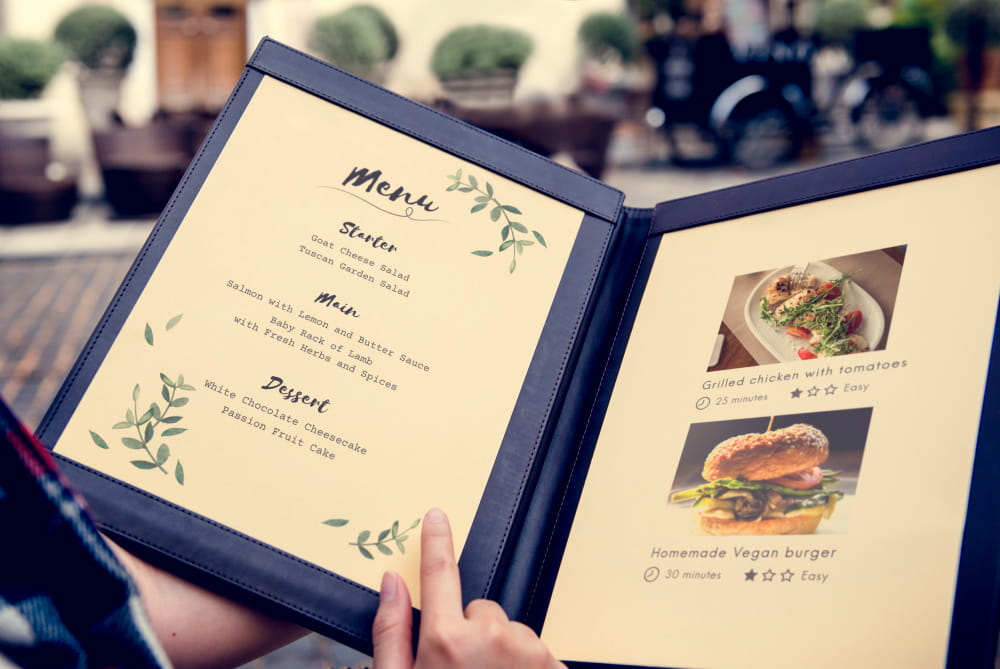
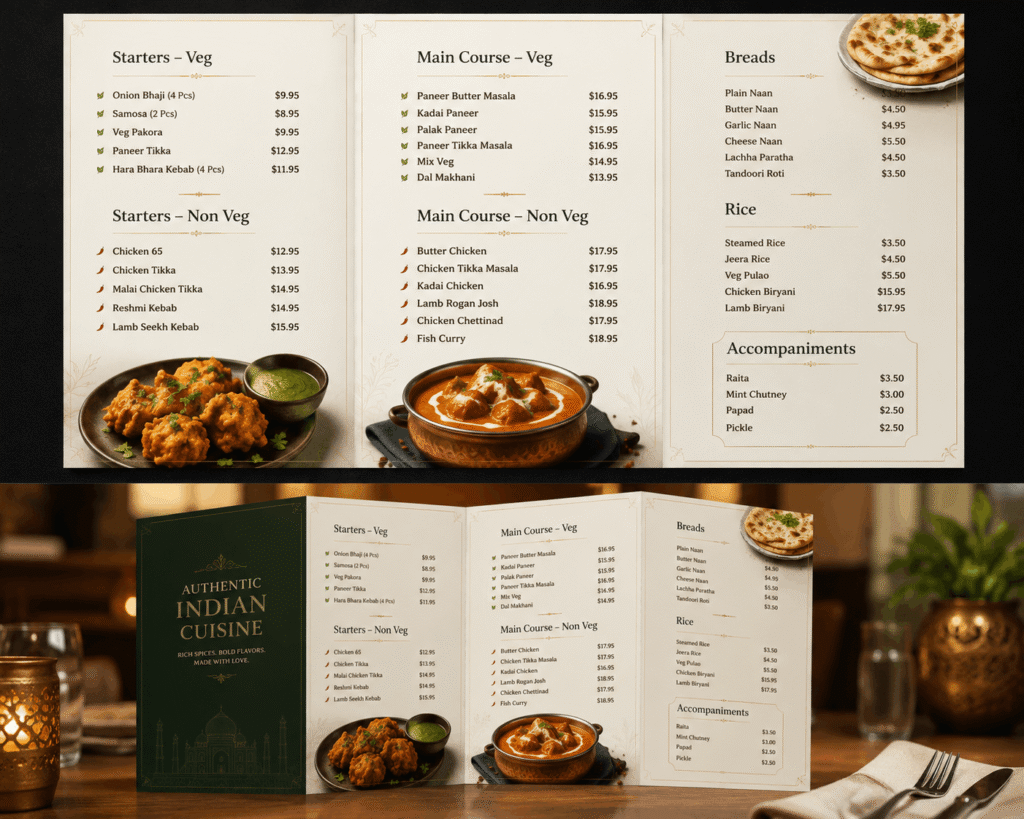
Bi-Fold Menu Design
This is one of the most common menu styles. It looks clean and professional. Best for:
- Restaurants
- Cafes
- Multi-cuisine food chains
Tri-Fold Menu Design
Tri-fold menus provide more space for food items and offers. Perfect for:
- Takeaway restaurants
- Fast food outlets
- Delivery menus
Single Page Menu
Simple and minimal. Great for:
- Coffee shops
- Juice bars
- Bakeries
Digital Menu Design
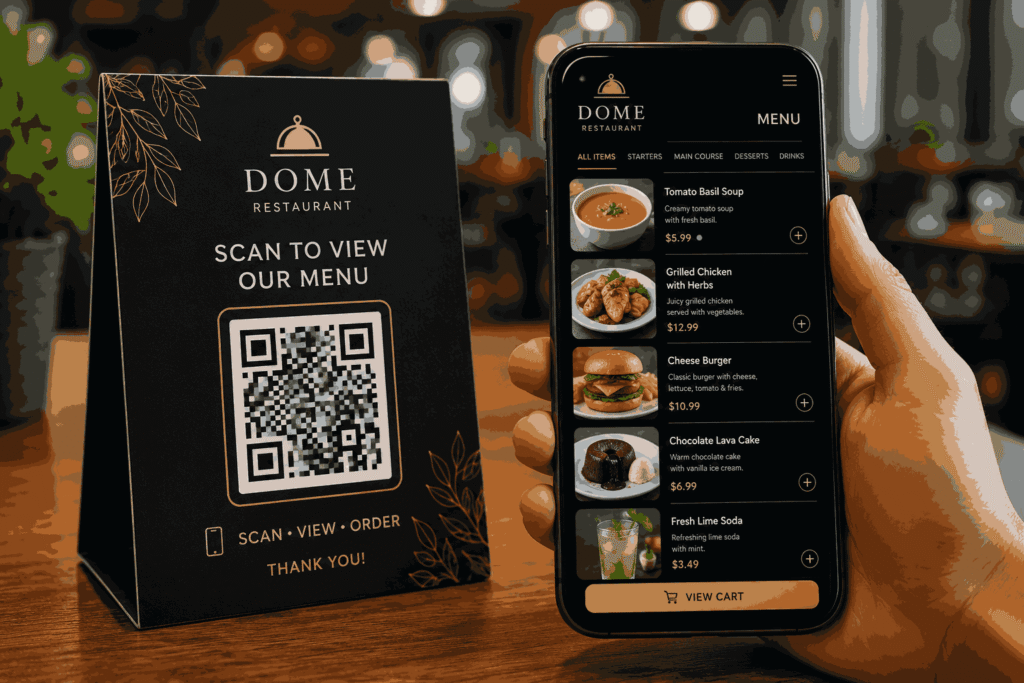
Modern restaurants now use QR code menus and digital menu boards. These are:
- Easy to update
- Cost-effective
- Hygienic
- Mobile-friendly
Digital menu design is becoming very popular in Australia, the USA, the UK, and India.
Important Elements of a Great Menu Card
Attractive Typography
Fonts should be stylish but readable. Fancy fonts may look good but can confuse customers.
Professional designers choose balanced typography that matches your restaurant vibe.
High-Quality Food Images
Food images should look delicious and clean. Low-quality images can damage your brand image.
Good menu designs use:
- Professional food photography
- Balanced image placement
- Proper lighting visuals
Smart Color Combination
Colors affect customer psychology.
For example:
- Red and orange create feelings of hunger
- Black gives a luxury appearance
- Green works well for healthy food brands
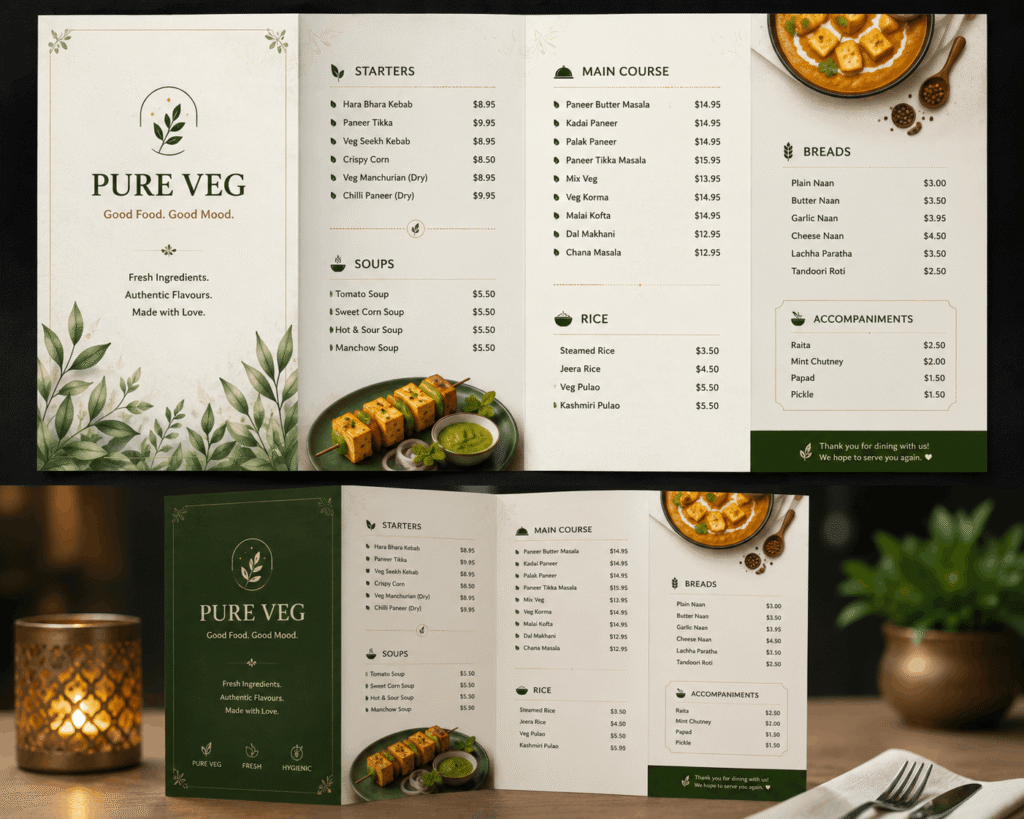
Choosing the right color palette is very important.
Proper Pricing Structure
Prices should be easy to understand without making the menu look crowded.
Clean alignment improves readability.
Highlight Special Items
Your bestseller dishes should stand out visually. Designers often use:
- Boxes
- Icons
- Color highlights
- Chef recommendation badges
This helps increase orders.
Why Restaurants Need Custom Menu Designs
Using free online templates may save money initially, but it does not create uniqueness.
Custom menu card design gives:
- Original branding
- Better customer trust
- Professional business image
- Better marketing value
Your restaurant deserves a design that matches your food quality.
Menu Design Trends in 2026
Restaurant menu design is no longer just about listing food items and prices. In 2026, menus have become an important part of a restaurant’s branding, customer experience, and marketing strategy. A well-designed menu can influence purchasing decisions, strengthen brand identity, and even increase average order value. Whether it’s a printed menu or a digital version, modern restaurants are focusing on designs that are visually appealing, easy to navigate, and aligned with customer expectations.
Below are some of the most popular restaurant menu design trends in 2026.
1. Minimal Design
Minimalism continues to dominate restaurant menu design in 2026 because it makes menus easier to read and more visually appealing. Instead of filling every inch of the page with graphics and text, restaurants are using plenty of white space, clean typography, and organized sections.
A minimalist menu highlights the food rather than distracting customers with unnecessary design elements. Simple layouts also help customers quickly find the dishes they want, reducing decision fatigue and creating a better dining experience.
Many premium restaurants choose minimal designs because they communicate professionalism, elegance, and confidence in their food quality.
Key Features:
- Clean and uncluttered layout
- Easy-to-read fonts
- Plenty of white space
- Limited use of colors
- Focus on food names and descriptions
2. QR Code Menus
Digital menus accessed through QR codes have become a standard feature in many restaurants. Customers simply scan the QR code using their smartphone camera to view the complete menu without touching a physical menu.
Beyond hygiene, QR code menus offer significant business advantages. Restaurants can update prices, add seasonal dishes, remove unavailable items, or promote daily specials instantly without reprinting menus. This saves both time and printing costs.
Many restaurants also integrate online ordering, payment options, customer reviews, loyalty programs, and promotional offers into their digital menus, creating a seamless customer experience.
Benefits include:
- Instant menu updates
- Reduced printing expenses
- Contactless ordering experience
- Easy addition of seasonal or limited-time items
- Better integration with online ordering systems
3. Dark Theme Menus
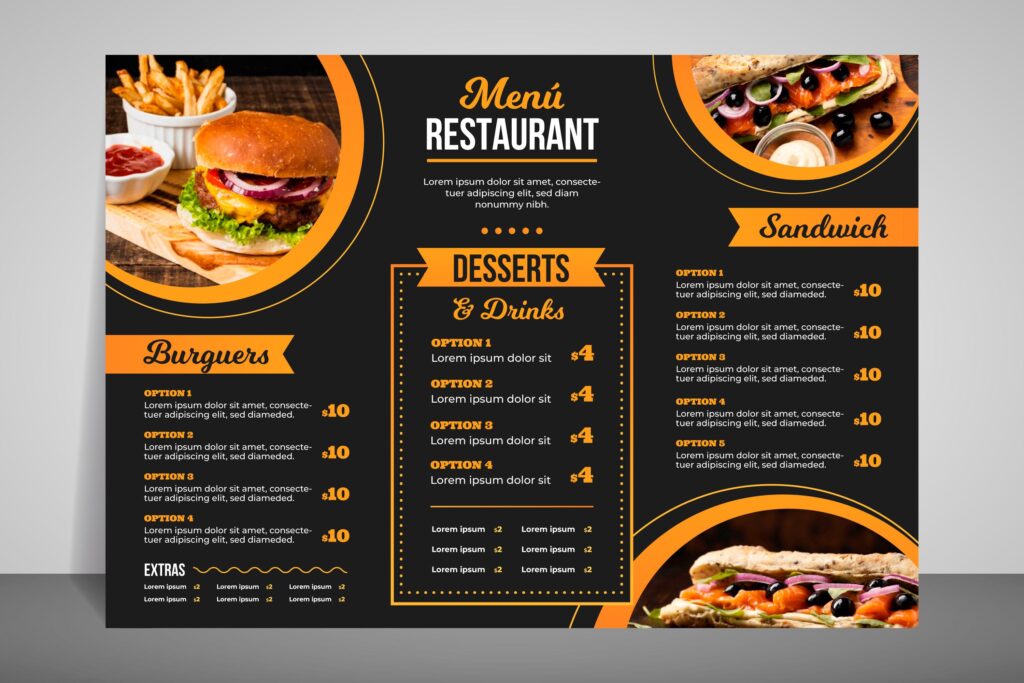
Dark-themed menus have become increasingly popular among luxury restaurants, cocktail bars, rooftop lounges, and fine dining establishments. A black, charcoal, or deep-colored background combined with elegant typography creates a sophisticated and premium appearance.
Dark menus also allow food photography or signature dishes to stand out through strategic use of contrasting colors. Gold, white, or metallic typography is commonly paired with dark backgrounds to create a luxurious visual identity.
This style works particularly well for restaurants that want to position themselves as upscale or exclusive.
Common design elements include:
- Black or dark-colored backgrounds
- Gold, white, or silver typography
- Elegant serif or premium sans-serif fonts
- Minimal decorative graphics
- High-quality food imagery
4. Handwritten Style Fonts
Restaurants and cafés that want to create a warm, personal, and welcoming atmosphere are increasingly using handwritten-style typography. This trend helps businesses appear more authentic and handcrafted rather than overly corporate.
Handwritten fonts are especially popular in coffee shops, bakeries, dessert cafés, organic restaurants, and small family-owned businesses because they reflect creativity and individuality.
However, successful menu designers use these fonts carefully. Typically, handwritten typography is reserved for headings, featured dishes, or promotional sections, while the main menu text remains in clean, readable fonts to ensure clarity.
This style is commonly used for:
- Café menus
- Bakery menus
- Dessert shops
- Organic restaurants
- Artisan food brands
5. Eco-Friendly Menu Design
Sustainability has become an important factor in restaurant branding, and menu design is no exception. Many restaurants are adopting eco-friendly practices by reducing paper waste, using recycled materials, and designing menus that require fewer resources to produce.
Some businesses print menus on recycled or biodegradable paper using soy-based inks, while others reduce environmental impact by offering digital menus through QR codes. Minimalist layouts also contribute to sustainability by using less ink and fewer pages.
An environmentally conscious menu not only reduces costs over time but also strengthens the restaurant’s reputation among customers who value sustainable business practices.
Popular sustainable approaches include:
- Recycled paper menus
- Biodegradable printing materials
- Soy-based or eco-friendly inks
- QR code digital menus
- Minimalist designs that reduce paper and ink usage
Why These Trends Matter
Modern menu design is about much more than aesthetics. It influences how customers perceive your restaurant, how easily they make ordering decisions, and even how much they spend. By adopting trends such as minimal layouts, digital QR menus, premium dark themes, handwritten typography, and eco-friendly materials, restaurants can create memorable dining experiences while reinforcing their brand identity.
Choosing the right menu design should always reflect your restaurant’s concept, target audience, and overall branding strategy. A thoughtfully designed menu not only showcases your food but also serves as a powerful marketing tool that encourages customer engagement, improves satisfaction, and supports long-term business growth.
Common Mistakes In Menu Card Design
Avoid these mistakes while designing your menu:
Too Much Text
Large paragraphs make menus difficult to read.
Overcrowded Layout
Too many items on one page create confusion.
Low-Quality Images
Blurred images reduce food appeal.
Wrong Font Selection
Hard-to-read fonts frustrate customers.
Poor Color Contrast
Customers should easily read text from the background.
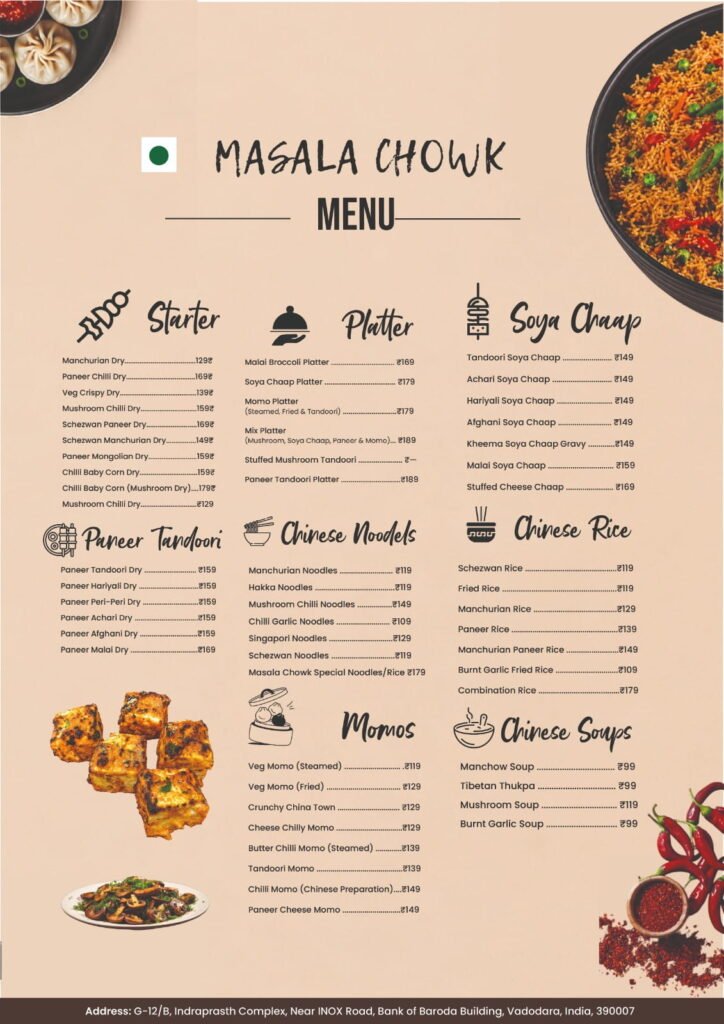
How Professional Designers Create Effective Menus And Our Collections
Professional designers follow a proper strategy instead of randomly placing text and images.
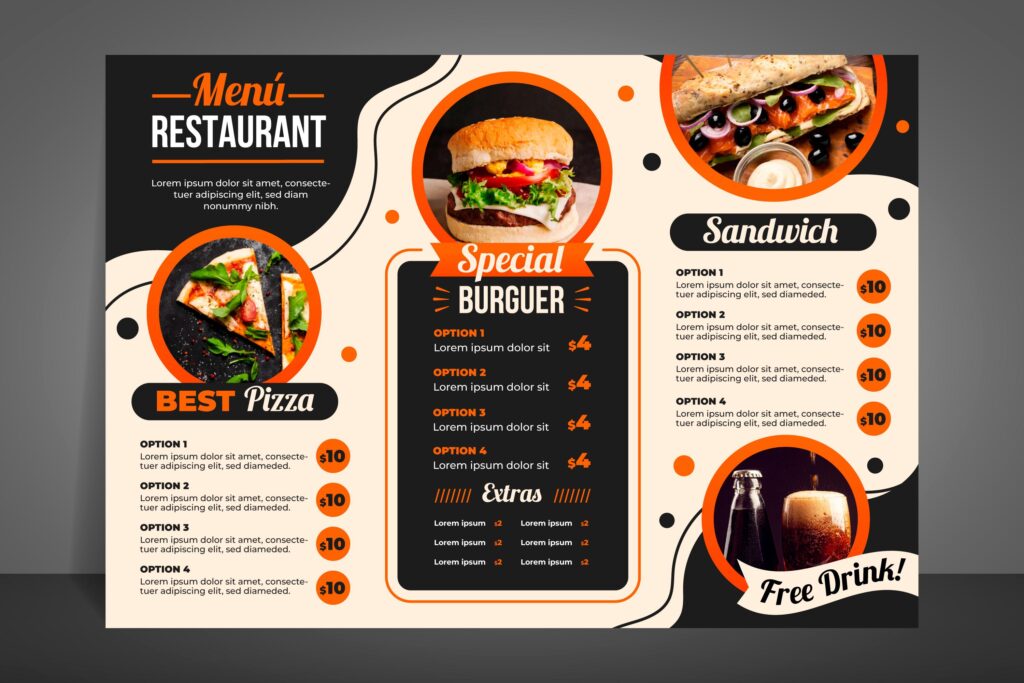
They focus on:
- Customer psychology
- Brand identity
- Food presentation
- Readability
- Print quality
- Marketing goals
This makes a huge difference compared to free template designs.
Why Choose Picasso Multimedia
At Picasso Multimedia, we create modern and creative menu card designs for:
- Restaurants
- Cafes
- Bakeries
- Food trucks
- Cloud kitchens
- Hotels
- Bars
We focus on creating designs that not only look beautiful but also help businesses attract more customers.
Our menu card design services include:
- Custom menu design
- Print-ready files
- QR menu design
- Digital menu boards
- Food brochure design
- Restaurant branding support
We understand modern food branding trends and create designs that fit your business style perfectly.
Conclusion
A creative menu card is more than just paper. It is a powerful branding and marketing tool for your restaurant business.
Customers notice presentation before taste. A clean, stylish, and professional menu helps build trust and improve customer experience.
Whether you own a small cafe or a large restaurant chain, investing in professional menu card design services can help your business look more premium and attract more orders.
If you want modern, attractive, and business-focused menu card designs, Picasso Multimedia is here to help.
Ready To Upgrade Your Restaurant Branding?
Get professional and creative menu card design services from Picasso Multimedia today.
Visit www.picassomultimedia.com and let’s create something amazing for your food business.