
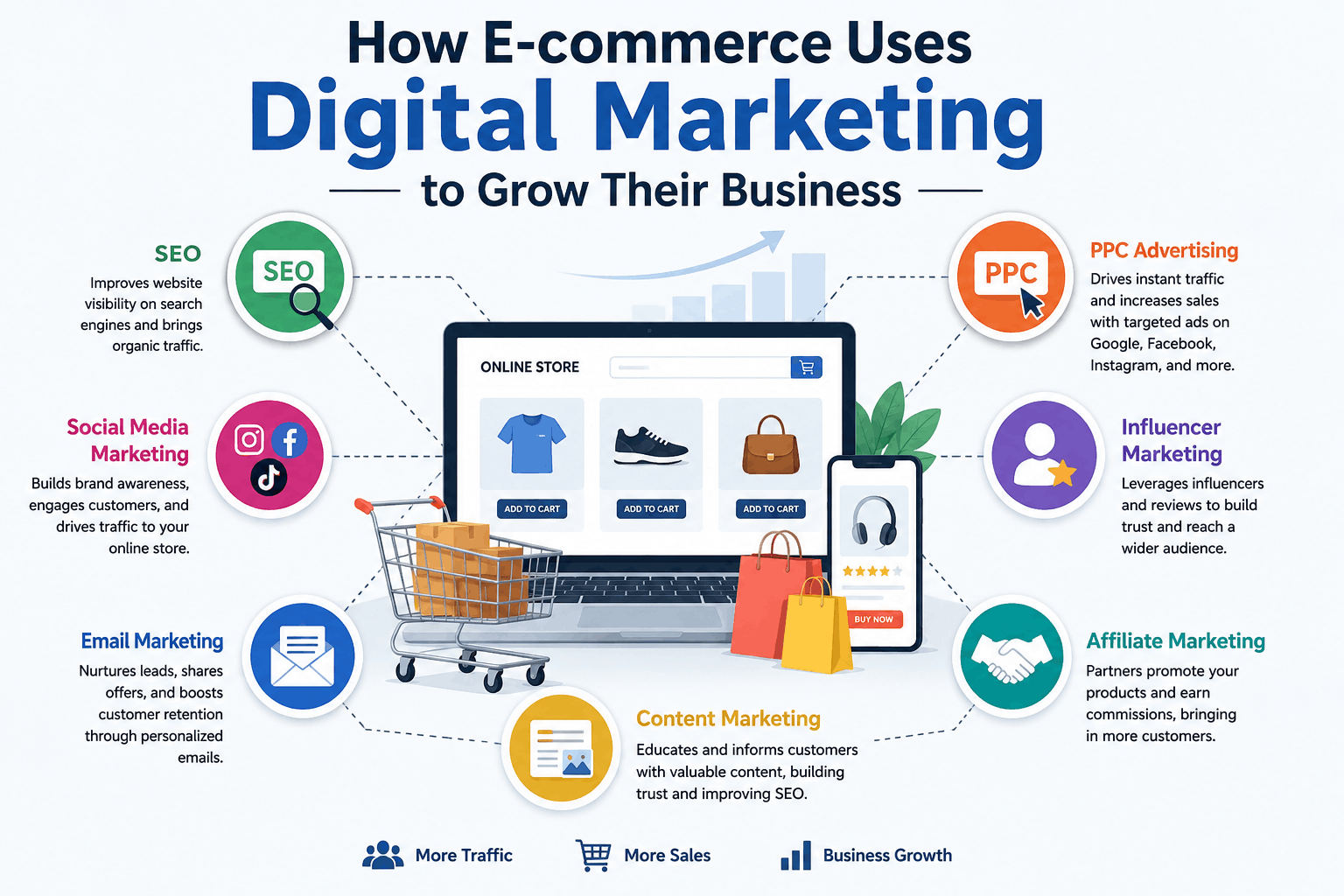
The e-commerce industry has evolved from being a convenient shopping alternative to an essential part of modern consumer life. With millions of online stores competing for attention, it’s no longer enough to simply list products and wait for sales. This is where digital marketing becomes the backbone of growth for e-commerce businesses. Digital marketing helps e-commerce brands build visibility, attract targeted traffic, convert visitors into buyers, and retain loyal customers.
In this blog, we’ll explore how e-commerce businesses use different digital marketing strategies to scale their growth effectively.
Search Engine Optimization (SEO): Boosting Organic Visibility
SEO is one of the most cost-effective digital marketing strategies for e-commerce businesses. Every time Search Engine Optimization (SEO) is one of the most effective and sustainable digital marketing strategies for e-commerce businesses. When potential customers search for products on Google or other search engines, they are more likely to click on websites that appear on the first page of the search results. A higher ranking not only increases website traffic but also builds credibility and trust, leading to more conversions and sales. Unlike paid advertising, SEO generates consistent organic traffic over time, making it a cost-effective long-term investment for online stores.
A successful e-commerce SEO strategy involves several key elements. It starts with keyword research to identify the exact terms and phrases potential customers use when searching for products. These keywords are then naturally incorporated into product titles, descriptions, category pages, URLs, image alt text, and meta tags through on-page SEO. Technical SEO ensures that the website loads quickly, is mobile-friendly, has a clear site structure, uses structured data (schema markup), and can be easily crawled and indexed by search engines. Additionally, content SEO plays a vital role by publishing valuable blog posts, buying guides, FAQs, comparison articles, and educational content that answers customer questions and attracts users at different stages of the buying journey.
When all these SEO elements work together, an e-commerce website gains better visibility in search results, attracts highly targeted visitors, reduces dependency on paid advertising, and creates a steady stream of qualified traffic. Over time, this leads to higher brand awareness, improved customer trust, and sustainable business growth.
Social Media Marketing: Building a Community & Brand Awareness
Social media platforms like Instagram, Facebook, Pinterest, and TikTok are essential for e-commerce. Social media marketing has become an essential part of every successful e-commerce strategy. Platforms such as Instagram, Facebook, Pinterest, TikTok, LinkedIn, and YouTube allow brands to reach millions of potential customers, showcase their products visually, and build meaningful relationships with their audience. Unlike traditional advertising, social media enables two-way communication, allowing businesses to engage directly with customers, answer questions, collect feedback, and create a strong brand personality. This continuous interaction helps businesses stay top-of-mind while driving traffic to their online store.
E-commerce brands use social media in multiple ways to increase visibility and sales. They promote new product launches, seasonal collections, discounts, and exclusive offers through engaging posts, stories, reels, and short-form videos. Influencer marketing helps brands reach new audiences by partnering with trusted creators who recommend products to their followers, increasing credibility and purchase intent. Many businesses also leverage social commerce, enabling customers to browse and purchase products directly through features like Instagram Shop, Facebook Shop, and TikTok Shop, creating a seamless shopping experience. Additionally, brands encourage user-generated content (UGC) by sharing customer reviews, testimonials, unboxing videos, product photos, and real-life experiences, which act as authentic social proof and influence buying decisions.
A well-planned social media strategy goes beyond simply posting product images. By consistently publishing valuable content, participating in trending conversations, celebrating festivals and special occasions, responding to customer interactions, and creating engaging campaigns, e-commerce businesses can build a loyal community around their brand. This not only increases brand awareness and customer trust but also improves engagement, drives website traffic, boosts conversions, and encourages repeat purchases, making social media one of the most powerful growth channels for modern e-commerce businesses.
Content Marketing: Educating and Engaging Customers
Content marketing is one of the most effective ways for e-commerce businesses to attract, educate, and convert potential customers. Instead of focusing solely on selling products, content marketing provides valuable and informative content that helps shoppers solve problems, answer questions, and make confident purchasing decisions. By consistently publishing relevant content, brands establish themselves as trusted industry experts, build credibility, and nurture long-term relationships with their audience. This trust often translates into higher customer loyalty, increased conversions, and repeat purchases.
E-commerce businesses create a variety of content to engage customers throughout their buying journey. Blog articles help answer common questions and target search queries, such as “Top 10 Gadgets for Students in 2026” or “How to Choose the Right Running Shoes.” Buying guides and product comparison articles simplify decision-making by comparing features, pricing, and benefits. Video tutorials, product demonstrations, and how-to guides showcase products in action, giving customers a better understanding of their value before making a purchase. Additionally, infographics, customer success stories, and brand storytelling create engaging experiences that strengthen emotional connections and make the brand more memorable.
Beyond customer education, content marketing also plays a significant role in improving search engine visibility. Well-optimized blogs, guides, FAQs, and evergreen resources help e-commerce websites rank for relevant keywords, driving consistent organic traffic without relying entirely on paid advertising. By offering useful, informative, and engaging content at every stage of the customer journey, e-commerce brands can increase website traffic, improve search rankings, build trust, generate qualified leads, and ultimately drive more sales while establishing a strong and lasting online presence.
Email Marketing: Personalization & Customer Retention
Email marketing remains one of the highest ROI-generating digital marketing channels for e-commerce businesses. Unlike social media or paid advertising, email gives brands a direct line of communication with their customers, making it easier to build long-term relationships, encourage repeat purchases, and improve customer retention. By delivering personalized and relevant messages based on customer behavior, preferences, and purchase history, businesses can keep their audience engaged throughout the customer journey.
E-commerce brands use a variety of email campaigns to nurture and retain customers. Welcome emails create a positive first impression after a customer signs up or makes their first purchase. Product recommendation emails suggest relevant items based on browsing history, previous purchases, or customer interests, increasing the likelihood of additional sales. Abandoned cart emails remind shoppers about products they left behind and often include incentives to complete the purchase. Businesses also send seasonal promotions, festive offers, exclusive discounts, and flash sale announcements to drive conversions during key shopping periods. In addition, order confirmations, shipping updates, post-purchase follow-ups, and feedback requests help improve the overall customer experience while building trust and satisfaction.
Modern email marketing platforms allow businesses to automate these campaigns using customer data and behavioral triggers. This ensures that the right message reaches the right customer at the right time without requiring manual effort. When combined with compelling copy, attractive designs, and personalized recommendations, email marketing helps e-commerce businesses increase customer engagement, recover lost sales, strengthen brand loyalty, and generate consistent revenue from existing customers, making it an essential strategy for sustainable business growth. Customer loyalty.
Pay-Per-Click Advertising (PPC): Instant Traffic and Sales
Pay-Per-Click (PPC) advertising is one of the fastest ways for e-commerce businesses to generate targeted traffic and increase sales. Unlike Search Engine Optimization (SEO), which takes time to build organic rankings, PPC campaigns provide immediate visibility by placing products and advertisements in front of potential customers who are actively searching or browsing online. Platforms such as Google Ads, Facebook Ads, Instagram Ads, Pinterest Ads, and Microsoft Ads enable businesses to reach highly specific audiences based on demographics, interests, online behavior, location, purchase intent, and even previous interactions with the brand. This precise targeting helps maximize advertising budgets while attracting customers who are more likely to convert.
E-commerce brands use a variety of PPC strategies to achieve different marketing objectives. Google Shopping Ads display product images, prices, ratings, and store information directly in search results, making it easier for shoppers to compare products and make purchasing decisions. Search Ads target high-intent keywords to capture customers actively looking for specific products. Remarketing (Retargeting) Ads reconnect with visitors who viewed products or added items to their cart but left without completing the purchase, encouraging them to return and buy. Businesses also invest in social media advertising on platforms like Facebook, Instagram, and TikTok to promote new arrivals, limited-time offers, and seasonal campaigns while increasing engagement and conversions. Additionally, display and banner ads help improve brand awareness by reaching potential customers across websites, mobile apps, and online platforms.
One of the biggest advantages of PPC advertising is its ability to deliver measurable and scalable results. Businesses can monitor key performance metrics such as impressions, clicks, click-through rate (CTR), conversions, cost per click (CPC), and return on ad spend (ROAS), allowing them to continuously optimize campaigns for better performance. Whether launching a new product, running a festive sale, promoting limited-time discounts, or increasing brand visibility in a competitive market, PPC enables e-commerce businesses to generate immediate traffic, attract qualified leads, boost online sales, and achieve faster business growth.
Influencer & Affiliate Marketing: Trust-Based Promotion
Influencer and affiliate marketing have become essential growth strategies for modern e-commerce businesses. Consumers today are more likely to trust recommendations from people they follow than traditional advertisements. By partnering with influencers, content creators, bloggers, and affiliate marketers, brands can showcase their products to highly engaged audiences in a more authentic and relatable way. These trust-based marketing approaches help businesses increase brand awareness, reach new customer segments, and generate qualified traffic without relying solely on direct advertising.
Influencer marketing involves collaborating with social media creators who promote products through reels, stories, live sessions, product reviews, tutorials, and unboxing videos. Their genuine experiences and recommendations help build credibility, increase customer confidence, and encourage purchase decisions. Businesses often work with both macro influencers for broad reach and micro influencers for higher engagement within niche communities. On the other hand, affiliate marketing allows bloggers, YouTubers, website owners, and industry experts to earn a commission by promoting products through unique referral links. Since affiliates are rewarded only when they generate sales or leads, this model offers a performance-based and cost-effective way to acquire customers.
When executed strategically, influencer and affiliate marketing can significantly improve an e-commerce brand’s visibility, reputation, and sales. Authentic product reviews, customer testimonials, and creator-generated content provide valuable social proof that influences purchasing decisions. These strategies also help brands access new markets, build long-term partnerships, and increase conversions while keeping marketing costs under control. As a result, influencer and affiliate marketing continue to be powerful tools for driving sustainable e-commerce growth through trust, credibility, and word-of-mouth promotion.
CRO techniques include:
- A/B testing for product pages, CTA buttons, and layouts
- Fast-loading, mobile-friendly website design
- Clear product descriptions, reviews, and return policies
- Easy checkout process with multiple payment options
Even a small improvement in conversion rate can lead to a big increase in revenue.
Customer Reviews & Testimonials: Building Trust
Online shoppers usually check product reviews before purchasing. E-commerce websites encourage customers to leave feedback, ratings, and photos after delivery.
Positive reviews:
- Build trust and credibility
- Improve search rankings
- Boost conversions and reduce doubts
Brands often feature reviews on product pages, social media, and ads to enhance trustworthiness.
Analytics & Data-Driven Marketing
Digital marketing gives e-commerce businesses access to real-time analytics. Using tools like Google Analytics, Facebook Insights, and CRM systems, businesses track:
- Website visitors
- Conversion rates
- Customer behavior
- Best-selling products
- Return on ad spend (ROAS)
This data helps brands improve marketing strategies and make smarter business decisions.
Conclusion
Digital marketing is the driving force behind the success of modern e-commerce businesses. From improving search engine visibility through SEO and building brand awareness on social media to nurturing customer relationships with email marketing and generating instant sales through paid advertising, each strategy contributes to attracting qualified traffic, increasing conversions, and fostering long-term customer loyalty. When these digital marketing channels work together, they create a powerful ecosystem that supports sustainable business growth.
In today’s highly competitive online marketplace, simply having an e-commerce website is no longer enough. Businesses must actively promote their products, engage with their audience, and continuously optimize their digital presence to stay ahead of the competition. Brands that invest in a well-planned digital marketing strategy are better positioned to increase visibility, strengthen customer trust, drive consistent sales, and build a recognizable brand.
Whether you’re launching a new online store or looking to scale an existing e-commerce business, now is the ideal time to leverage the power of digital marketing. With the right strategies, tools, and consistent execution, you can transform your online store into a profitable, customer-focused business that continues to grow in the ever-evolving digital landscape.